Identity Theft Recovery Checklist: What to Do in the First 48 Hours
An identity theft recovery checklist is your most vital tool the moment you discover your personal information has been compromised. If you just found fraudulent activity or a new account opened in your name, executing an identity theft recovery checklist immediately is the single most important step you can take.
Finding out your identity was stolen feels like a gut punch. Whether you noticed a strange $5,000 charge on your credit card or received a notice about a loan you never applied for, panic is your enemy right now. Speed is your weapon.
This identity theft recovery checklist is designed to guide you through the critical first 48 hours. This timeframe dictates whether a security breach becomes a minor weekend inconvenience or a multi-year financial nightmare.
You don’t need a textbook on cybersecurity. You need to stop the bleeding, lock the doors, and establish a legal paper trail so you aren’t held liable for stolen money. Follow this exact timeline.
Phase 1 of Your Identity Theft Recovery Checklist: Stop the Bleeding (Hours 1–12)
Do not start by calling the police. Start by shutting down the point of entry.
1. Call the Fraud Department of the Compromised Account
If you know exactly where the breach happened (e.g., your Chase credit card or your Bank of America checking account), call the number on the back of your card immediately.
- Tell them your identity was stolen.
- Demand they freeze the account and reverse any pending fraudulent charges.
- Ask for a written confirmation stating that the fraudulent charges are under formal investigation.
2. Change the “Big Three” Passwords
Identity thieves often use compromised email accounts to reset banking logins. Immediately change the passwords for your:
- Primary Email Account (Gmail, Outlook)
- Primary Bank Accounts
- Mobile Carrier (AT&T, Verizon, T-Mobile) to prevent a SIM-swap attack.
Your Ecosystem Tool: If a hacker drained your checking account and you need to calculate how to survive the next 30 days while the bank investigates, run your remaining cash through theSmart Budget Planner & Cash Flow Analyzer. You should also verify your backup reserves using theFinancial Safety & Emergency Fund Planner.
Phase 2: The Credit Lockdown (Hours 12–24)
Once the immediate threat is paused, your identity theft recovery checklist must pivot to preventing the thief from opening new accounts in your name. You have three options, but the financial industry intentionally makes them confusing.
The Defense Matrix: Fraud Alert vs. Credit Freeze vs. Credit Lock
| Security Measure | How It Works | Cost & Duration | How to Activate |
| Fraud Alert | Forces lenders to verify your identity (usually by calling you) before approving new credit. Does not block access to your report. | Free. Lasts 1 year (or 7 years for confirmed victims). | Contact just one credit bureau. By law, they must notify the other two. |
| Credit Freeze (Security Freeze) | Completely locks your credit file. No one (including you) can open new accounts until you use a PIN to unfreeze it. | Free (Protected by federal law). Lasts until you remove it. | You must contact all three bureaus (Equifax, Experian, TransUnion) separately. |
| Credit Lock | An app-based toggle switch to lock your credit. Highly convenient but governed by a private corporate contract, not federal law. | Monthly Fee (Usually bundled in a $15-$30/mo subscription). | Handled via each bureau’s premium smartphone app. |
The Action Step: You need a Credit Freeze. A fraud alert is too weak for confirmed identity theft, and a credit lock is an unnecessary monthly expense.
Go directly to the freeze portals for all three major bureaus:
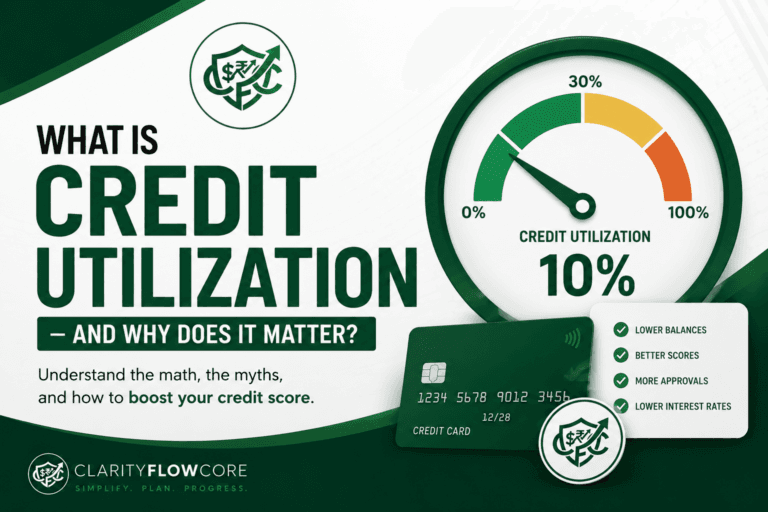
Your Ecosystem Tool: Identity theft can temporarily distort your credit utilization if a thief maxes out a card. Once the dust settles, use the Credit Utilization Planner & Recovery System and the Credit Score Simulator & Improvement Planner to map your score’s recovery.
Phase 3: Official Documentation (Hours 24–48)
An effective identity theft recovery checklist requires establishing a legal paper trail. You cannot simply tell creditors, “It wasn’t me.” You must prove it using federal documentation.
1. Pull Your Credit Reports
Go to AnnualCreditReport.com (the only federally authorized site). Download your reports from all three bureaus. Highlight any accounts, inquiries, or addresses you do not recognize.
- Further Reading: How to Read and Fix Errors on Your Credit Report.
2. File the FTC Identity Theft Affidavit
Go to IdentityTheft.gov, operated by the Federal Trade Commission (FTC).
- Fill out the complaint form with exact details.
- Crucial Step: Print or save the resulting Identity Theft Affidavit as a PDF immediately. This is your official document for forcing banks to remove fraudulent debts.
3. File a Local Police Report
Take your FTC Affidavit, a government ID, and proof of address to your local police precinct.
- Tell them you need to file an identity theft report.
- If the desk officer is reluctant (which happens often because identity theft is rarely investigated locally), hand them the FTC’s “Memo to Law Enforcement” included with your affidavit.
- Get a physical copy of the official police report.
Combining your FTC Affidavit and Police Report creates an official Identity Theft Report. You will mail copies of this packet to every creditor who demands proof of fraud.
Your 48-Hour Identity Theft Recovery Checklist
Print this summary or save it on your phone. Do not skip a step.
☐ Call the fraud department of the bank where the breach occurred to freeze the specific account.
☐ Change passwords for your email, bank accounts, and mobile carrier.
☐ Place a Fraud Alert by calling Equifax (1-800-685-1111). They will notify Experian and TransUnion automatically.
☐ Place a Credit Freeze at all three bureaus individually (Equifax, Experian, TransUnion).
☐ Pull your credit reports at AnnualCreditReport.com and identify all fraudulent activity.
☐ Generate an FTC Affidavit at IdentityTheft.gov.
☐ File a Police Report at your local precinct and secure a physical copy.
☐ Mail dispute letters (including your FTC and Police reports) to any company showing fraudulent accounts.
Real-World Scenario: The Freelancer Tax Nightmare
Consider a freelance video editor who logs into tax software in April to file a return, only to receive a rejection notice: A return has already been filed under this Social Security Number.
A thief used their SSN to file a fake return and steal a fraudulent tax refund. Because independent contractors pay quarterly estimated taxes, the thief walked away with thousands of hard-earned dollars.
How to Fix It:
Because this involves the federal government, standard credit freezes aren’t enough. The freelancer must execute the identity theft recovery checklist above, but add one critical step: They must contact the IRS Identity Protection Specialized Unit and fill out IRS Form 14039 (Identity Theft Affidavit). The IRS will then issue an IP PIN (Identity Protection PIN)—a specific 6-digit code required to file all future tax returns, permanently locking scammers out of the tax profile.
(Note: Independent contractors are heavily targeted for tax fraud. Review our 1099 Taxes Explained for Freelancers and Side Hustlers guide to ensure your business structure is secure).
5 Deadliest Recovery Mistakes
❌ Paying a scammer to “fix” it: Never hire a third-party company that promises to erase identity theft for an upfront fee. You can (and must) complete every step on this identity theft recovery checklist for free using official federal portals.
❌ Only freezing one credit bureau: Lenders use different bureaus. Freezing Experian does nothing if the thief applies for a loan at a bank that checks TransUnion. You must freeze all three.
❌ Ignoring medical identity theft: Thieves don’t just steal money; they steal healthcare. If a thief uses your identity to get surgery, their medical history could be merged into your record. Always audit your Explanation of Benefits (EOB) statements.
❌ Closing the account but keeping the password: If a hacker breaches your bank, closing the checking account doesn’t help if you use that exact same password for your retirement portal.
❌ Treating a Credit Lock like a Credit Freeze: Do not pay a credit bureau $29 a month for a “Credit Lock.” Federal law guarantees you a free “Credit Freeze,” which provides stronger legal protection if a bureau makes a mistake.
Frequently Asked Questions
Will I lose all my stolen money?
If the theft occurred on a credit card, federal law caps your liability at $50 (and most banks waive even that). If the theft occurred in a checking account or debit card, the Electronic Fund Transfer Act protects you, but only if you report it quickly. If you report it within 2 days, your liability is capped at $50. If you wait 60 days, you could lose everything. Speed matters.
Does a credit freeze hurt my credit score?
No. A security freeze has zero impact on your credit score. It simply acts as a locked door, preventing lenders from viewing your report until you unlock it. (Avoid these actual score-killers: 10 Credit Score Mistakes That Can Cost You 100+ Points).
Should I sign up for LifeLock or identity monitoring?
You can, but understand what they do. Identity monitoring services do not prevent identity theft; they simply alert you faster when it happens. Following this identity theft recovery checklist and utilizing a free Credit Freeze is a far superior preventative tool than a paid monitoring subscription.
Can I just get a new Social Security Number?
The Social Security Administration (SSA) almost never issues a new SSN just because yours was stolen. You must prove that the ongoing fraud is causing severe, unresolvable hardship. For 99% of victims, freezing your credit and utilizing an IRS IP PIN is the required solution.
Your Action Plan
Identity theft is a violation, but it is not a permanent financial death sentence.
If you are reading this because you suspect fraud, stop reading and start acting. Call your bank right now to freeze compromised accounts. Once secured, execute this identity theft recovery checklist by heading directly to AnnualCreditReport.com and IdentityTheft.gov.
Establish your legal paper trail today so you can restore your financial security tomorrow.
Sources & Further Reading
Official U.S. Guidelines & Tools
- Federal Trade Commission (FTC): IdentityTheft.gov Recovery Portal
- Consumer Financial Protection Bureau (CFPB): Credit Freeze vs. Fraud Alert Guidelines
- Internal Revenue Service (IRS): Identity Protection Specialized Unit
- AnnualCreditReport.com: The federally authorized portal for free credit reports.
Further Reading from Clarity Flow Core
- How to Read and Fix Errors on Your Credit Report
- 10 Credit Score Mistakes That Can Cost You 100+ Points
- Emergency Fund Basics: How Much Cash Should You Keep?
- Credit Utilization Planner & Recovery System
Disclaimer: The information provided in this article is for educational and informational purposes only and does not constitute financial or legal advice. If you are the victim of identity theft, immediately utilize the official resources provided by the FTC at IdentityTheft.gov and consult with local law enforcement.
About Author

Rishabh Nigam
Rishabh Nigam founded Clarity Flow Core to make personal finance easier to understand for everyday readers. He covers credit scores, debt repayment, credit utilization, loan readiness, taxes, and financial planning through practical guides, calculators, and educational resources. His content focuses on turning complex financial concepts into clear, actionable steps that readers can apply in real life.