Rebalancing Your Portfolio: When and How Often?
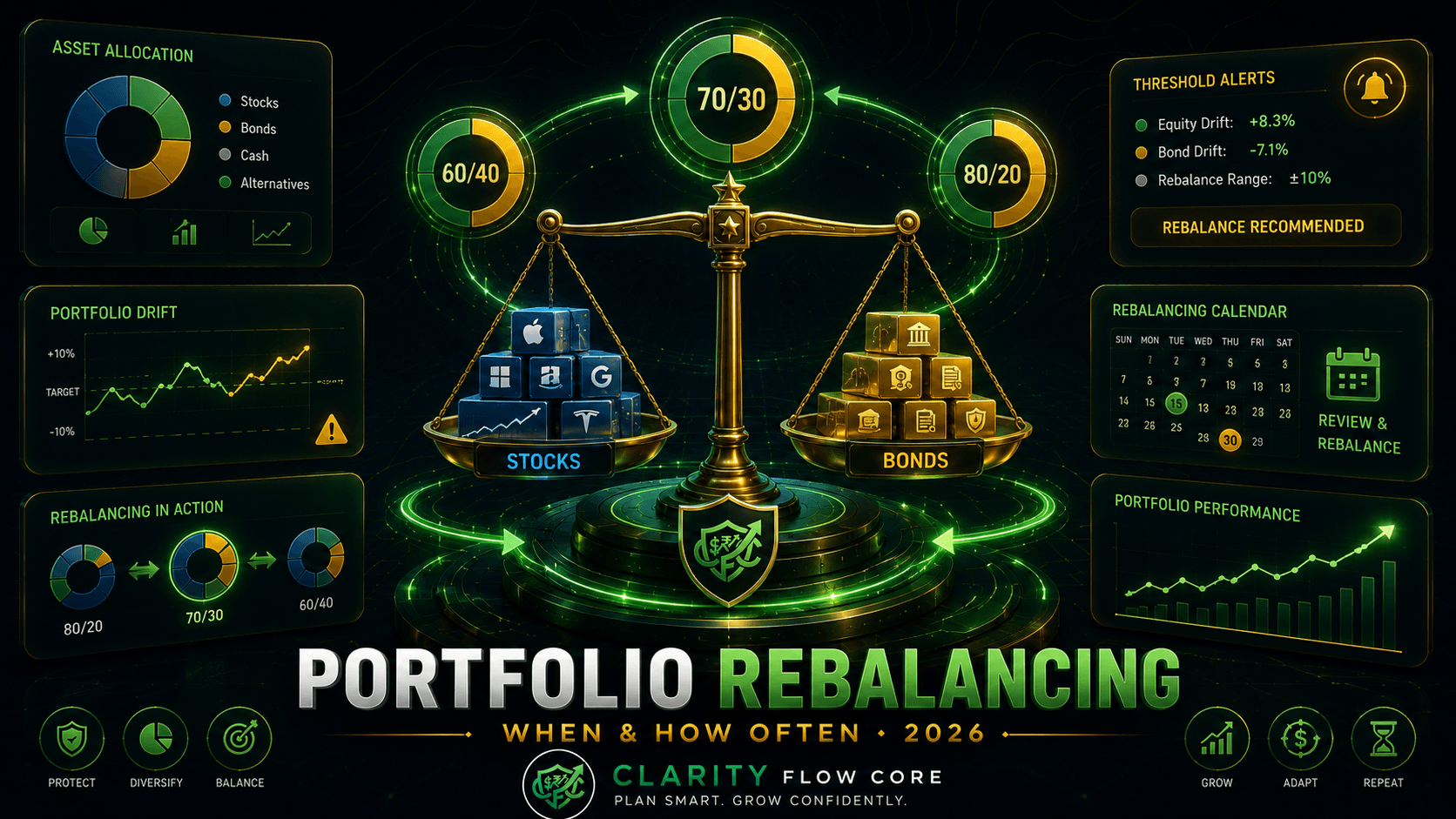
When you first build an investment strategy, you select a specific ratio of stocks to bonds—known as your asset allocation—based entirely on your timeline and risk tolerance. However, financial markets are completely unpredictable. Over time, as certain stocks surge and bonds fluctuate, your carefully balanced portfolio will mathematically drift away from your original targets.
If you never correct this drift, your portfolio slowly takes on significantly more risk than you originally planned.
Rebalancing reduces the volatility and riskiness of your investment portfolio and keeps you strictly aligned with your goals. It is not a tool for market-timing; it is a foundational principle of risk management.
But if you are searching for the mechanics of rebalancing your portfolio, when and how often should you actually execute the trades? Here is the definitive 2026 framework for correcting asset drift while avoiding high transaction costs.
Phase 1: The Three Rebalancing Methodologies
Before deciding when to trade, you must choose the mechanical trigger that will force you to log into your brokerage account and take action. There are three primary frameworks used by U.S. financial advisors today.
The Rebalancing Strategy Matrix
How to mathematically trigger your portfolio trades.
1. Static Calendar Strategy
- How it Works: You adjust your portfolio strictly on fixed intervals, such as quarterly or annually.
- The Reality: It requires minimal thought and avoids emotional decision-making, but entirely ignores market volatility that occurs between those dates.
2. Threshold-Based Strategy
- How it Works: Dynamic rebalancing is activated only when an asset strays from its target allocation by a specific absolute percentage, like 5%.
- The Reality: It is highly responsive to market turbulence, but the timing of your trades becomes completely unpredictable.
3. The Hybrid Strategy
- How it Works: This combines a calendar review with an asset drift readjustment.
- The Reality: You monitor the portfolio on a given schedule (e.g., annually), but you only execute a trade if the assets have strayed by more than your specific percentage threshold.
Your Ecosystem Tool: Not sure how far your assets have drifted? Plug your current balances into the Investment Portfolio Planner & Goal Allocation Analyzer to see exactly how much you are off-target.
Phase 2: When and How Often Should You Trade?
Many new investors assume they need to micromanage their accounts constantly. However, the data strongly suggests that less is actually more.
Vanguard research analyzed the efficiency of annual, quarterly, and monthly rebalancing strategies. The study revealed that checking and rebalancing your portfolio either quarterly or monthly produced no improvement in long-term risk or returns.
In fact, high-frequency rebalancing simply drove up the portfolio turnover rate and the number of rebalancing events. Because transaction costs tend to rise during highly volatile environments, less frequent portfolio rebalancing—specifically annually—was found to be the most optimal and cost-efficient approach for standard investors.
Real-World Scenario: The 5% Tolerance Band
To understand how to practically answer the question of rebalancing your portfolio, when and how often, you have to combine the timeline with a tolerance threshold.
Consider a standard U.S. investor targeting a baseline 60/40 portfolio (60% equities, 40% bonds). They decide to employ a hybrid strategy, utilizing an annual calendar check paired with a 5% absolute tolerance band.
During a massive, rapid bull market, their stocks skyrocket while their bonds stay relatively flat. Over a 12-month period, their equity allocation drifts significantly.
- If they check their account in January and their stocks have only risen to 63%, they do absolutely nothing. The drift is within their 5% tolerance band, so they let the winners ride.
- If they check their account and their equities have breached the threshold by ballooning to 67%, a rebalancing trade is triggered.
To fix it, they simply sell 7% of their highly appreciated stock index funds and use that cash to buy more bond index funds, forcibly bringing the portfolio back down to a strict 60/40 split. This mathematically forces them to “sell high and buy low.” (To understand the exact funds to use for this, refer to Asset Allocation Strategies for Beginners: The 2026 Guide).
4 Deadliest Mistakes When Rebalancing
As you execute your asset adjustments, protect your net worth by avoiding these four wealth-destroying traps:
❌ Rebalancing too frequently: Do not rebalance every single month. Adjusting your portfolio on a hyper-frequent timeline dramatically increases your transaction costs and triggers wasteful trading fees without delivering a premium on your returns.
❌ Ignoring tax consequences in standard brokerage accounts: Rebalancing inside a U.S. 401(k) or IRA is a non-taxable event. However, if you sell appreciated assets in a standard taxable brokerage account to fix your allocation, you will immediately trigger capital gains taxes. (Check your exposure with the Tax Strategy Planner & Annual Tax Savings Analyzer).
❌ Trading on emotion instead of math: Dynamic rebalancing works because it avoids emotional decision-making. If you let fear of a bear market stop you from selling your stable bonds to buy temporarily depressed stocks, you defeat the entire purpose of the strategy.
❌ Failing to update your risk tolerance with age: Your target allocation should not be static for your entire life. If you transition into your 60s, a 90% equity portfolio is extremely dangerous. You must update your core targets to reflect your approaching retirement before you rebalance.
Frequently Asked Questions
Is there a way to rebalance without selling any assets? Yes. You can use cash flow rebalancing. Instead of selling your over-performing assets, you simply direct all of your new monthly deposits exclusively toward the under-performing asset class until the original percentage is restored. This entirely avoids transaction fees and capital gains taxes.
Do target-date funds rebalance automatically? Yes. If you invest in a target-date fund or a lifecycle fund, the fund managers make all of the decisions regarding asset allocation and rebalancing for you. It is a completely hands-off “set it and forget it” strategy that reduces risk as you approach the target year.
Should I rebalance if my portfolio drops in a market crash? Yes. If a severe bear market causes your equity allocation to plummet below your target threshold, a rebalancing purchase is triggered. You would sell some of your stabilizing bonds to buy stocks at a massive discount, ensuring your portfolio captures the upside when the market eventually recovers.
Your Action Plan
Take the guesswork and emotion out of managing your wealth. Now that you have a framework for rebalancing your portfolio, when and how often, execute these three steps:
- Define Your Absolute Threshold: Determine how far you are willing to let your assets drift before intervening. Setting a 5% absolute tolerance band is a highly standard baseline used by institutional researchers.
- Set Your Annual Calendar Alert: Pick one day a year—such as your birthday or New Year’s Day—to log into your accounts. If your asset drift exceeds your threshold, make the necessary trades to bring it back to baseline.
- Run an Annual Stress Test: Review your risk tolerance using the Retirement Readiness Planner & Retirement Income Analyzer to verify that your target asset allocation still aligns with your actual retirement timeline.
Sources & Further Reading
Official U.S. Guidelines & Consumer Resources
- Securities and Exchange Commission (SEC): Beginners’ Guide to Asset Allocation, Diversification, and Rebalancing
- FINRA: Asset Allocation and Diversification
Essential Tools from Clarity Flow Core
- Investment Portfolio Planner & Goal Allocation Analyzer
- Net Worth Tracker & Wealth Growth Planner
- Tax Strategy Planner & Annual Tax Savings Analyzer
- Retirement Readiness Planner & Retirement Income Analyzer
Further Reading from Clarity Flow Core
- Asset Allocation Strategies for Beginners: The 2026 Guide
- ETF vs. Mutual Fund vs. Index Fund: Which Should Beginners Choose?
- How Capital Gains Taxes Work for Beginners
Disclaimer: The information provided in this article is for educational and informational purposes only and does not constitute financial, legal, or tax advice. Asset allocation, diversification, and portfolio rebalancing strategies do not guarantee a profit or protect against loss in a declining market. Rebalancing in a taxable account may trigger capital gains taxes. Always consult with a certified financial planner (CFP®) or a registered investment advisor before executing trades, adjusting your target asset allocations, or managing significant U.S. tax liabilities.
About Author

Rishabh Nigam
Rishabh Nigam founded Clarity Flow Core to make personal finance easier to understand for everyday readers. He covers credit scores, debt repayment, credit utilization, loan readiness, taxes, and financial planning through practical guides, calculators, and educational resources. His content focuses on turning complex financial concepts into clear, actionable steps that readers can apply in real life.