
The Hidden Costs of Buying a Home: What the Bank Won’t Tell You
You saved the down payment, secured the pre-approval letter, and finally had an offer accepted on a house you love. You run the estimated mortgage payment through an online tool like our Debt-to-Income Ratio Calculator, check your monthly budget, and assume the hard financial hurdles are behind you.
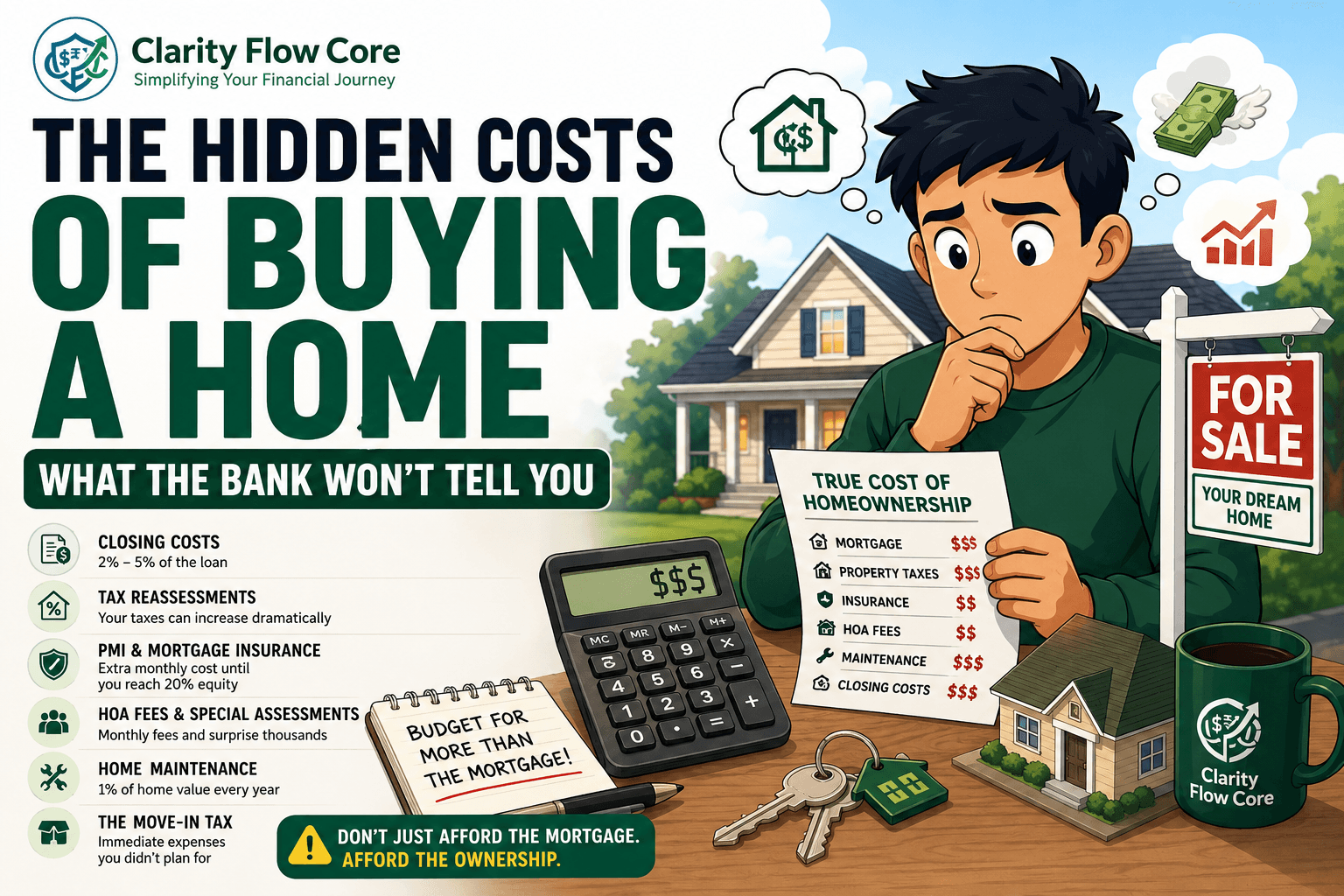
A monthly mortgage payment is only the baseline cost of homeownership. The primary hidden expenses include:
- Upfront Closing Costs: Lender and title administrative fees totaling 2% to 5% of the loan value.
- Property Tax Reassessments: Post-purchase municipal reassessments that spike annual taxes and trigger severe escrow shortages.
- Private Mortgage Insurance (PMI): A recurring annual fee of 0.5% to 1.5% applied whenever conventional loan equity is under 20%.
- The 1% Maintenance Baseline: An ongoing operational reserve of 1% to 2% of the property’s market value every year for upkeep.
- HOA Special Assessments: Unplanned, mandatory lump-sum assessments levied by homeowners associations for capital repairs.
The most dangerous financial mistake in real estate is treating the mortgage principal and interest payment as the total cost of ownership.
On paper, a mortgage calculation looks simple. Many buyers scrape together every spare dollar to reach their minimum down payment, leaving little to no liquid cash in reserve. Within the first ninety days, the operational realities of owning physical real estate hit: a supplemental property tax assessment arrives in the mail, an aging HVAC condenser fails during a heat wave, or local sewer fees require an upfront deposit.
A house is an operational liability before it becomes an appreciating asset. Online listing portals like Zillow and Redfin rely on baseline loan assumptions and historical owner tax figures that rarely reflect current post-sale expenses. Here is the operational breakdown of the hidden costs of buying a home, the exact figures to budget for, and how to avoid becoming house poor.
The Upfront Shock: Closing Costs
The first major expense hits at the closing table before you receive the keys. The down payment represents only the equity portion of a transaction; buyers must also pay legal and administrative closing costs to complete the transfer and finalize lender underwriting.
Closing costs typically range between 2% and 5% of the total loan amount.
On a $400,000 mortgage, you must bring an additional $8,000 to $20,000 in liquid cash to the settlement table.
| Closing Cost Item | What It Covers | Estimated Cost |
| Loan Origination & Underwriting | Lender administrative fees for evaluating and processing the mortgage. | 0.5% to 1.0% of the loan |
| Appraisal Fee | An independent valuation confirming the property meets the purchase price. | $400 – $800 |
| Home Inspection | A licensed inspector examining structural integrity, roofing, and mechanical systems. | $350 – $650 |
| Title Search & Lender’s Title Insurance | Verification of clean property ownership and legal protection against liens. | $1,000 – $2,500 |
| Prepaid Taxes & Insurance (Escrow Cushion) | Upfront funding for 2 to 6 months of property taxes and homeowners insurance. | $2,000 – $4,500 |
If you exhaust your entire savings balance to clear the down payment, the mortgage underwriter will deny final loan approval due to insufficient closing cash reserves.

The Stealth Trap: Property Tax Reassessments
Property tax adjustments frequently blindsight first-time buyers within six to twelve months of ownership.
Listing aggregators typically display the existing owner’s annual property tax assessment. Relying on this figure to plan your monthly payment creates serious budgetary shortfalls.
If the previous owner purchased the property a decade ago for $180,000, their tax assessment reflects that historical valuation or may be limited by state homestead caps. When you purchase that home for $420,000, the municipal tax assessor reassesses the property based on the newly recorded sale price. The annual tax liability rises accordingly.
The Escrow Shortage Deficit
Most lenders manage property taxes and homeowners insurance using an Escrow Account, collecting 1/12th of the estimated annual costs alongside each monthly principal and interest payment (PITI).
When the local municipality delivers the updated, higher tax bill, your existing escrow account falls into a deficit. The loan servicer will conduct an annual escrow analysis, report an Escrow Shortage, and present two immediate payment demands:
- Pay a one-time cash lump sum (often $2,000 to $5,000) to clear the deficit and restore the required reserve cushion.
- Permanently increase your monthly mortgage payment by $250 to $500 per month to spread out last year’s deficit while funding the higher ongoing tax obligation.
(For detailed steps on auditing your servicer’s math and handling a sudden payment increase, refer to our operational breakdown on Why Your Escrow Payment Increased Suddenly).
The Low-Down-Payment Surcharge: PMI
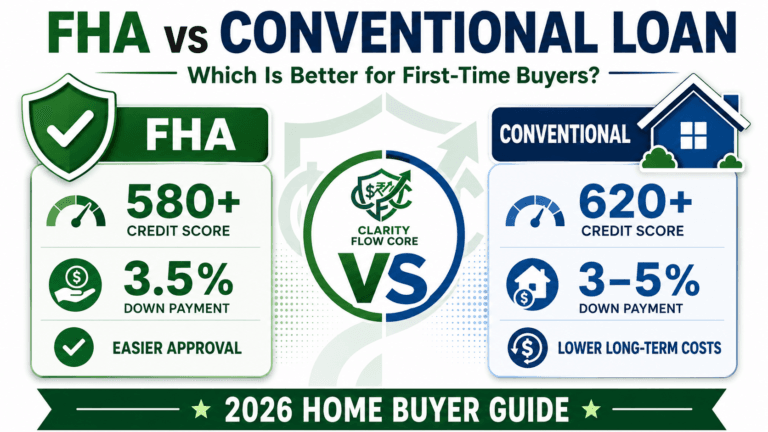
Financing a home purchase with less than a 20% down payment introduces Private Mortgage Insurance (PMI) on conventional loans, or an upfront and annual Mortgage Insurance Premium (MIP) on FHA loans.
This insurance provides zero protection to the homeowner. It protects the mortgage lender against financial loss in the event of default and foreclosure.
Conventional PMI rates generally run between 0.5% and 1.5% of the original loan balance annually.
- The Math: On a $350,000 mortgage with a 1.0% annual PMI rate, the additional fee equals $3,500 per year, or roughly $291 per month.
This payment does not reduce your loan balance or build home equity; it is an unrecoverable financing cost. PMI remains active on conventional loans until your principal balance reaches 80% of the home’s original value (or drops off automatically at 78% under the Homeowners Protection Act).
The 1% Ongoing Maintenance Rule
In a rental property, the landlord covers structural deterioration, appliance failures, and plumbing emergencies. In homeownership, maintenance and repairs shift entirely to your personal operating budget.
Building materials and home systems decay continuously:
- Asphalt shingle roofs require replacement every 20 to 25 years ($8,000 – $15,000).
- Central HVAC compressors carry a typical lifespan of 12 to 15 years ($6,000 – $10,000).
- Standard water heaters last roughly 8 to 12 years ($1,200 – $2,500).
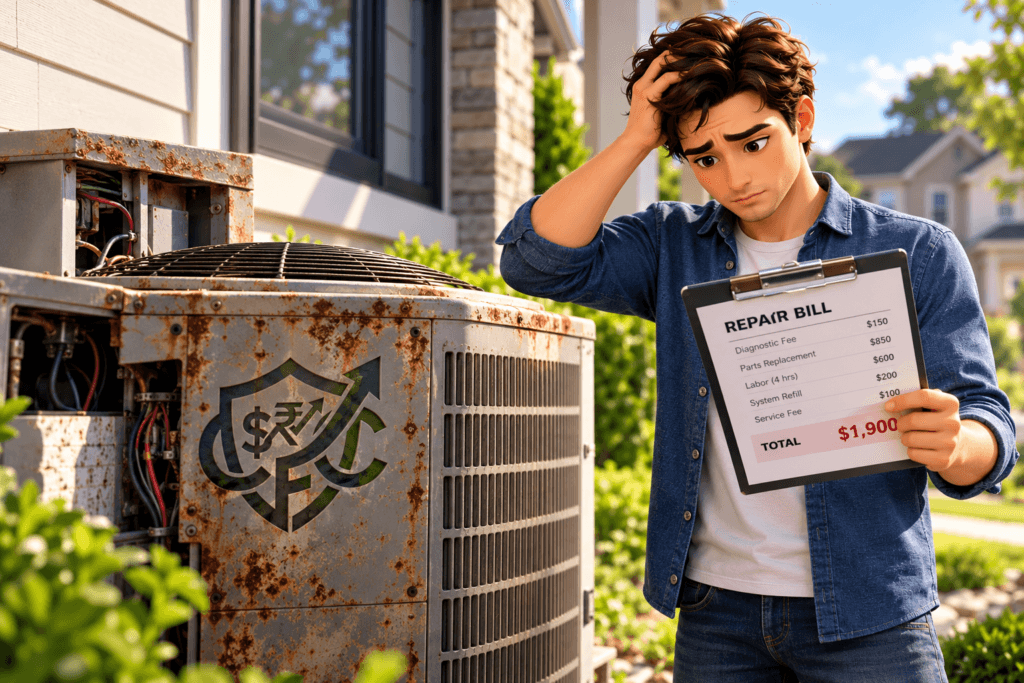
Financial planners rely on the 1% Maintenance Rule: set aside at least 1% of the property’s total market value each year into an exclusive maintenance sinking fund. For a $400,000 home, this requires an annual budget of $4,000 (roughly $333 per month).
Skipping this line item leaves buyers vulnerable to paying emergency repair costs with high-interest credit cards, starting an unsustainable debt cycle.
(If home maintenance costs have pushed your revolving debt balances higher, use our Credit Utilization Calculator to evaluate payoff scenarios and protect your credit score).
The Immediate “Move-In” Expenses
The first 30 days in a newly acquired home require significant unbudgeted out-of-pocket expenses to establish basic household functionality:
- Security Updates: Rekeying exterior deadbolts or installing smart locks ($150 – $350).
- Window Coverings: Purchasing blinds, shades, or curtains across multiple exposed rooms ($400 – $1,200).
- Property Maintenance Equipment: Essential lawnmowers, string trimmers, hoses, ladders, and snow clearance tools ($500 – $1,000).
- Safety & Infrastructure: Upgrading smoke detectors, replacing carbon monoxide monitors, servicing chimney flues, and running initial pest treatments ($300 – $600).
Failing to maintain $2,000 to $3,000 in dedicated liquid funds for immediate move-in needs creates immediate financial friction during your first month of occupancy.

Homeowners Association (HOA) Rules & Special Assessments
Purchasing a property located within an HOA, condominium association, or master-planned development requires mandatory membership and recurring dues.
While monthly or quarterly HOA dues ($150 to $700+ per month) are disclosed during the offer process, the primary financial hazard is a Special Assessment.
When an association’s long-term capital projects—such as roof replacements, private road paving, or structural elevator repairs—exceed the cash held in its capital reserve fund, the board can vote to levy a mandatory assessment across all unit owners. These lump-sum bills often range from $3,000 to over $15,000 per household. Unpaid HOA assessments can result in a legal lien placed on the property, potentially triggering foreclosure.
Before waiving loan contingencies, always request and examine the association’s Reserve Study and recent meeting minutes to confirm adequate capital reserve funding.
Avoiding the “House Poor” Cycle: A Pre-Purchase Checklist
To prevent mortgage commitments from overwhelming your total financial plan, run your underwriting numbers through a strict affordability framework:
- Enforce Strict Debt Limits: Do not base your home search on the maximum pre-approval figure provided by a lender. Calculate your front-end debt ratio so that total housing obligations (PITI + PMI + HOA) remain below 28% of your gross monthly income. Test your current limits with our Mortgage Affordability Calculator & Home Buying Planner.
- Separate Emergency Cash from House Maintenance: Do not blend baseline emergency savings with ongoing repair reserves. Maintain a fully funded liquid reserve using our Emergency Fund Calculator, and store property maintenance reserves in a separate high-yield savings vehicle.
- Calculate Reassessed Millage Rates: Contact the county or municipal tax assessor’s office directly to identify the local millage rate. Multiply that local rate by your anticipated purchase price to establish an accurate property tax baseline before submitting an offer.
Frequently Asked Questions (FAQs)
Can I roll closing costs into the mortgage balance?
On conventional purchase transactions, lenders generally do not allow you to add standard closing costs directly to the loan principal unless you are refinancing. Some lenders offer “lender credits” where they pay a portion of your closing expenses in exchange for charging a permanently higher interest rate over the life of the loan. Paying closing fees in liquid cash avoids ongoing interest charges.
Can the seller pay closing costs for the buyer?
Yes. Depending on local market conditions and loan guidelines, buyers can negotiate for “Seller Concessions.” Under conventional loan guidelines, sellers can contribute up to 3% of the purchase price toward buyer closing costs on down payments under 10% (and up to 6% on down payments of 10% to 25%). In competitive seller markets, however, asking for concessions can weaken an offer.
When does private mortgage insurance automatically end?
Under the federal Homeowners Protection Act, servicers must automatically cancel PMI on conventional mortgages once the principal balance is scheduled to reach 78% of the home’s original value, provided payments are current. You can also submit a written request for early cancellation once your loan principal reaches 80% through extra payments or documented market appreciation. Note: FHA loans with down payments under 10% carry MIP for the entire loan term, requiring a future conventional refinance to eliminate the fee.
Does a home warranty eliminate repair expenses?
A residential home warranty is an optional service contract (typically $500 to $900 annually) that covers repair or replacement of specific mechanical components. Warranties require trade service call fees (usually $75 to $125 per claim) and often exclude pre-existing wear, cosmetic damage, or secondary water damage. Home warranties do not replace the need for an independent, liquid 1% cash maintenance fund.
Moving Forward
Real estate remains a reliable pillar of household wealth creation, provided you approach purchase agreements with clear arithmetic.
Look past standard listing figures and account for upfront closing fees, local tax reassessments, structural maintenance reserves, and association structures before signing a purchase agreement. Establishing a balanced operational budget ensures your home remains a source of long-term stability rather than immediate financial stress.
(To determine how your total housing costs fit into your wider compensation and savings plans, review our strategic analysis on How Much of Your Income Should Go Toward Housing Costs?).
Sources & References
- Consumer Financial Protection Bureau (CFPB): Owning a Home – Detailed regulatory guidance covering closing cost disclosures, loan estimates, and escrow accounting.
- Fannie Mae: HomeView® Education – Homebuyer frameworks for property valuation, purchase expenses, and operational ownership budgeting.
- Federal Housing Administration (FHA): Buying a Home Guide – Underwriting guidelines for Mortgage Insurance Premiums (MIP) and minimum down payment limits.
Disclaimer: The information provided in this article is for educational and informational purposes only and does not constitute professional financial, legal, or real estate advice. Real estate laws, tax structures, and loan guidelines vary significantly by state and municipality. Consult with a qualified mortgage specialist, licensed real estate professional, or CPA regarding your specific home purchase.
About Author

Rishabh Nigam
Rishabh Nigam founded Clarity Flow Core to make personal finance easier to understand for everyday readers. He covers credit scores, debt repayment, credit utilization, loan readiness, taxes, and financial planning through practical guides, calculators, and educational resources. His content focuses on turning complex financial concepts into clear, actionable steps that readers can apply in real life.



One Comment
Comments are closed.