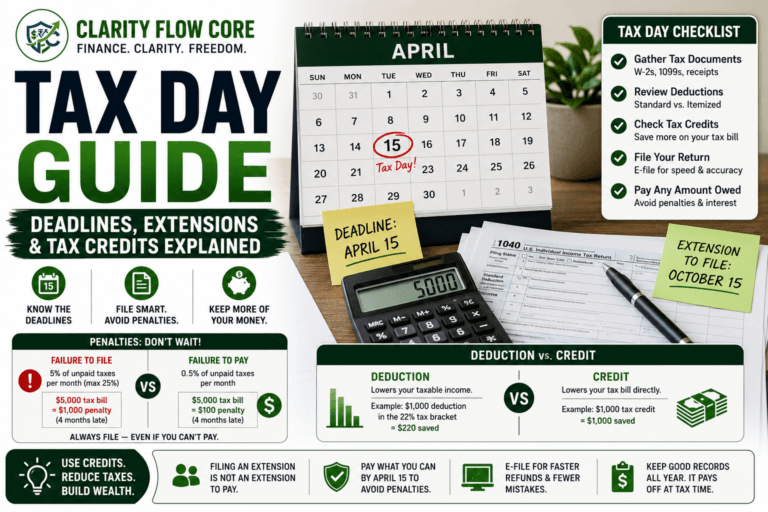

Tax Documents Checklist: Everything You Need Before Filing Your Taxes
Having a complete tax documents checklist is the single most important step you can take before filing your annual return. Filing your taxes is stressful enough on its own, but sitting down to file only to realize you are missing a crucial 1099 form or a massive expense receipt can turn a simple afternoon task into a week-long administrative nightmare.
The U.S. tax code is unforgiving when it comes to missing documentation. If you forget to report an income document that the IRS already has on file, you risk triggering an automated audit. Conversely, if you fail to track down the receipts for your legitimate business expenses, you are simply handing your hard-earned money back to the government.
Whether you rely on a single corporate W-2 or you are piecing together income from multiple freelance contracts, organization is your ultimate defense. Here is the definitive list to ensure you have exactly what you need before you log into your software or meet with your CPA.
Phase 1: The Core Documentation Matrix
Do not open your tax software or meet with your CPA until you have physically (or digitally) gathered the documents in these three core categories.
The Pre-Filing Master List
Secure these documents before starting your return.
1. Personal & Banking Info
- Identification: Social Security Numbers (SSN) or Tax ID Numbers (TIN) for you, your spouse, and all dependents.
- Prior Records: A copy of last year’s state and federal tax returns (essential for finding carryover losses).
- Banking Details: Routing and account numbers for direct deposit of your refund.
2. Proof of Income
- Employment: W-2 forms from all employers you had during the year.
- Independent Work: 1099-NEC or 1099-K forms for freelance and gig economy work.
- Passive Income: 1099-INT (interest), 1099-DIV (dividends), and 1099-B (brokerage sales).
3. Deductions & Credits
- Education/Health: 1098-E (student loan interest), 1098-T (tuition), Form 1099-SA (HSA distributions).
- Homeowners: Form 1098 (mortgage interest statement) and property tax records.
- Business: A categorized list of all self-employment expenses and digital receipts.
Your Ecosystem Tool: Not sure how your business deductions or W-2 withholdings will impact your final liability? Run your numbers through the Tax Strategy Planner & Annual Tax Savings Analyzer before filing.
Real-World Scenario: The Independent Creator’s Checklist
Filing taxes becomes significantly more complex when you step outside the traditional W-2 corporate structure.
Consider an independent video editor running their own digital content strategy and financial education brand. Because they do not have a single employer withholding taxes on their behalf, their document checklist looks vastly different.
First, they must track down every 1099-NEC from their various corporate editing clients. Then, they need to gather their proof of payment for the quarterly estimated taxes they sent to the IRS throughout the year, ensuring they don’t accidentally double-pay.
But most importantly, they must compile their business deduction receipts. For a digital creator, this means pulling the billing histories for their premium writing enhancement tools (like Quillbot), their digital asset libraries, video editing software subscriptions, and depreciation schedules for high-end rendering rigs. If they fail to organize these specific software and equipment receipts before filing, they will artificially inflate their profit margin and owe thousands of extra dollars in self-employment tax.
(If you manage a business, refer directly to the Freelance Video Editor Tax Guide: Deductions, Write-Offs & Basics to ensure you miss nothing).
4 Deadliest Mistakes When Gathering Tax Documents
As you compile your tax documents checklist, guard your net worth against these four severe administrative errors:
- ❌ Filing before all 1099s arrive: While W-2s must be sent by January 31st, many brokerage firms and freelance platforms will not finalize and mail your 1099-B or 1099-NEC until mid-to-late February. If you file on February 1st and receive a stray 1099 two weeks later, you will have to file an annoying (and sometimes costly) amended return.
- ❌ Throwing away receipts for standard deductions: Even if you plan to take the Standard Deduction rather than itemizing, you still need receipts for “above-the-line” deductions. Contributions to a Traditional IRA, student loan interest payments, and HSA contributions lower your taxable income regardless of whether you itemize.
- ❌ Guessing your estimated tax payments: If you are a freelancer or side hustler, you likely made quarterly estimated tax payments. Do not guess these amounts from memory. Pull your exact bank statements or log into your IRS.gov portal to find the precise dollar figures to report. (See Quarterly Estimated Taxes Explained for Freelancers and Side Hustlers).
- ❌ Discarding crypto transaction records: The IRS heavily scrutinizes cryptocurrency. Even if you just traded one coin for another (without cashing out to U.S. dollars), that is a taxable event. You must download the transaction ledger from your crypto exchanges.
Frequently Asked Questions
How long should I keep my tax documents after I file? The IRS recommends keeping all tax records, including W-2s, 1099s, and physical receipts for deductions, for at least three years from the date you filed your original return. If you claimed a loss from worthless securities or bad debt deduction, you should keep records for seven years.
What if I never received my W-2? If it is past mid-February and you still have not received your W-2, contact your employer’s HR department immediately to ensure they have your correct address. If they refuse to provide it, you can contact the IRS directly, and they will reach out to the employer on your behalf.
Do I need a physical receipt for every single business expense? Under the Cohan Rule, the IRS sometimes allows you to estimate expenses if you can prove the business nature of the cost, but it is highly risky. Digital records (like a PDF invoice, an email receipt, or a clear bank statement showing the vendor) are absolutely required for any expense over $75.
Your Action Plan
Stop procrastinating and take control of your financial filing. Here are the three steps you need to execute your tax documents checklist this week:
- Create the Digital Vault: Create a dedicated folder on your computer desktop titled “2026 Tax Documents.” As digital PDFs (1099s, W-2s, software receipts) arrive in your email, immediately drag them into this central location.
- Audit Your Income Sources: Write down every single company, brokerage, or client that paid you money this year. Do not file your return until you can check off a physical or digital document matching every name on that list. (If you had a side gig, review 1099 Taxes Explained for Freelancers and Side Hustlers).
- Optimize Your Withholdings: Once your taxes are filed, if you received a massive refund or owed a huge penalty, your W-4 is wrong. Adjust your paperwork with your employer to balance your cash flow. (Use the Tax Withholding & Paycheck Optimizer to find the exact numbers).
Sources & Further Reading
Official U.S. Guidelines & Consumer Resources
- Internal Revenue Service (IRS): Steps to Take Now to Get a Jump on Your Taxes
- Internal Revenue Service (IRS): How Long Should I Keep Records?
Essential Tools from Clarity Flow Core
- Tax Strategy Planner & Annual Tax Savings Analyzer
- Tax Withholding & Paycheck Optimizer
- Smart Budget Planner & Cash Flow Analyzer
Further Reading from Clarity Flow Core
- Freelance Video Editor Tax Guide: Deductions, Write-Offs & Basics
- 1099 Taxes Explained for Freelancers and Side Hustlers
- Quarterly Estimated Taxes Explained for Freelancers and Side Hustlers
- Standard Deduction vs. Itemizing: Which Option Saves More?
- W-4 Form Explained: How Tax Withholding Actually Works
Disclaimer: The information provided in this article is for educational and informational purposes only and does not constitute tax, legal, or financial advice. Tax laws change frequently and vary by state. Always consult with a Certified Public Accountant (CPA) or a registered tax professional before claiming deductions, reporting business income, or filing your official return.
About Author

Rishabh Nigam
Rishabh Nigam founded Clarity Flow Core to make personal finance easier to understand for everyday readers. He covers credit scores, debt repayment, credit utilization, loan readiness, taxes, and financial planning through practical guides, calculators, and educational resources. His content focuses on turning complex financial concepts into clear, actionable steps that readers can apply in real life.