
Year-End Tax Planning Checklist: 15 Moves to Make Before December 31
A complete year-end tax planning checklist is your best defense against an overwhelming IRS bill in April. In the U.S. tax system, December 31 is a hard, unforgiving deadline. If you want to claim a business deduction, harvest an investment loss, or shield your income in a 401(k) for the current tax year, the transaction must be fully settled before midnight on New Year’s Eve.
Waiting until April to think about your taxes is a massive financial mistake. By the time tax season arrives, it is entirely too late to change the math; you can only report what has already happened.
To actively lower your tax liability and protect your wealth, you must play offense in December. Here are the 15 critical moves you need to evaluate before the year ends.
Phase 1: The 15-Point Year-End Matrix
Do not wait until the final week of December to execute these strategies, as bank transfers and brokerage settlements can take several business days to clear.
The December 31 Countdown
15 strategic moves to lower your taxable income.
Income & Investments
- 1. Defer Income: Ask clients to delay paying late-December invoices until January 1st to push the income into next year.
- 2. Accelerate Expenses: Buy necessary business equipment in December rather than waiting for January.
- 3. Tax-Loss Harvesting: Sell underperforming stocks at a loss to offset your capital gains.
- 4. Check Your W-4: Adjust your withholding now to avoid underpayment penalties.
- 5. Mutual Fund Capital Gains: Avoid buying actively managed mutual funds in December right before they distribute taxable capital gains.
Deductions & Giving
- 6. Bunch Deductions: Combine two years of charitable giving into one year to exceed the Standard Deduction threshold.
- 7. Pre-pay Property Taxes: If it benefits you to itemize, pay your upcoming January property tax bill in December.
- 8. Spend Your FSA: Flexible Spending Accounts are “use it or lose it.” Spend the balance on eligible medical items before Dec 31.
- 9. Donate Appreciated Stock: Give highly appreciated shares directly to charity to avoid capital gains taxes entirely.
- 10. Audit Medical Bills: If your out-of-pocket medical costs exceed 7.5% of your AGI, pay outstanding bills in December to itemize them.
Retirement Setup
- 11. Max Your 401(k): Increase your final paycheck deductions to hit the annual contribution limit.
- 12. Fund Your HSA: Max out your Health Savings Account for a rare triple-tax advantage.
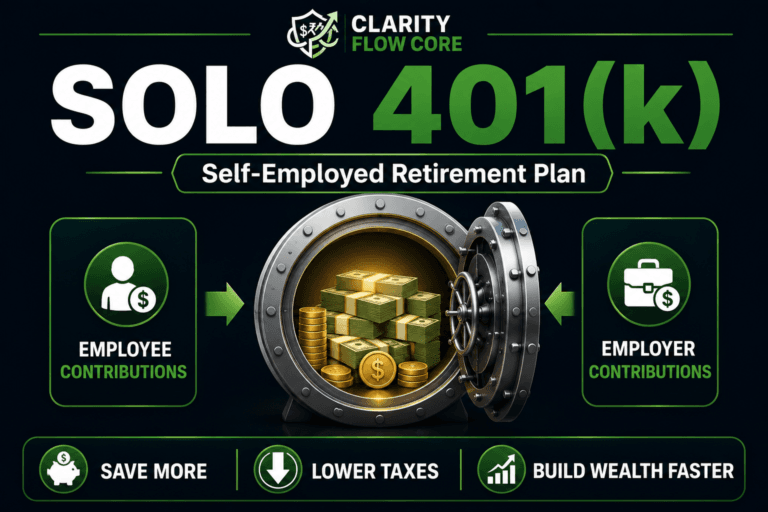
- 13. Open a Solo 401(k): Freelancers must formally open the account by Dec 31, even if they fund it later.
- 14. Execute Roth Conversions: Move Traditional IRA funds to a Roth IRA during a low-income year (must be completed by Dec 31).
- 15. Fund a 529 Plan: Contribute to an education plan to capture potential end-of-year state tax deductions.
Your Ecosystem Tool: Unsure if you should rush to buy business equipment or max a retirement account? Run your end-of-year numbers through the Tax Strategy Planner & Annual Tax Savings Analyzer to see the exact impact on your final tax bracket.
Real-World Scenario: The Strategic Freelancer
The difference between a W-2 employee and an independent contractor at the end of the year is staggering. A traditional employee has very little control over their W-2 income timing. A freelancer, however, can manipulate their timeline to completely alter their tax bracket.
Consider an independent freelance video editor who has had a highly profitable year producing digital assets and running a financial education platform. It is December 15th, and they just finished a massive corporate editing project. They are about to send a $6,000 invoice.
If they send the invoice today and get paid on December 28th, that $6,000 is taxed in the current, highly profitable year, meaning they will lose a significant chunk of it to their peak tax bracket.
Instead, they employ Move #1 (Defer Income) by intentionally waiting until January 1st to send the invoice. The cash arrives in the new year, pushing the tax liability 12 full months into the future.
Simultaneously, they realize their primary rendering computer is failing. Rather than waiting until February to replace it, they use Move #2 (Accelerate Expenses). They purchase a $4,000 editing rig on December 20th. Because the purchase was fully executed before December 31st, it instantly wipes $4,000 off their current year’s taxable income, dramatically lowering their upcoming IRS bill.
(For a complete breakdown of what you can legally expense, read the Freelance Video Editor Tax Guide: Deductions, Write-Offs & Basics).
4 Deadliest Mistakes in December
Do not let the end-of-year rush cause you to make expensive, unforced errors. Avoid these four traps:
- ❌ Spending a dollar to save twenty-five cents: Never buy business equipment in December just to get a tax deduction. If you buy a $1,000 camera you don’t actually need, you might save $250 in taxes, but you are still permanently out $750 in cash. Only accelerate expenses you were already planning to make.
- ❌ Forgetting the “Use it or Lose it” FSA rule: Unlike an HSA, a Flexible Spending Account (FSA) does not roll over indefinitely. If you have $500 sitting in your FSA on December 31st, the money vanishes. Go buy prescription glasses, first aid kits, or approved medical devices immediately. (Learn more in HSA vs FSA: Which One Actually Saves You More Money?).
- ❌ Missing the Roth Conversion deadline: While you have until April to contribute to a standard IRA, a Roth Conversion (moving pre-tax money to post-tax money) must be officially completed by December 31st to count for the current tax year. (See Roth Conversion Ladder Explained).
- ❌ Ignoring the Wash-Sale Rule: If you sell a stock at a loss in December to harvest the tax deduction (Move #3), you cannot buy that same stock back within 30 days. If you do, the IRS cancels your tax deduction entirely.
Frequently Asked Questions
Can I contribute to my IRA after December 31? Yes. Traditional and Roth IRA contributions are one of the very few exceptions to the December 31st rule. You generally have until Tax Day (typically April 15th) to make contributions for the previous calendar year.
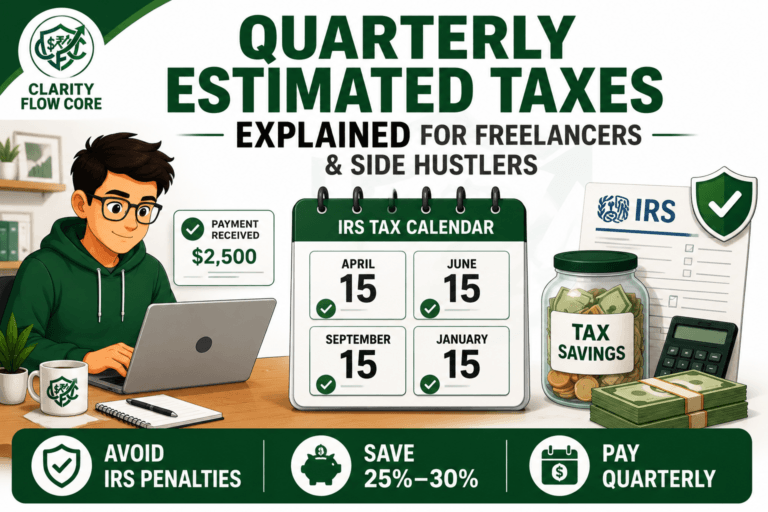
What if I didn’t pay enough estimated taxes this year? If you are a freelancer or have massive investment gains, you are required to make quarterly estimated tax payments. If you realize in December that you underpaid, you can make a fourth-quarter estimated payment by mid-January, or increase your W-4 withholding at your day job for the final few paychecks to avoid penalties. (Review W-4 Form Explained: How Tax Withholding Actually Works).
Do I need a business LLC to claim end-of-year expenses? No. If you operate as a sole proprietor (doing freelance work under your own name), you can still claim legitimate business deductions on Schedule C of your tax return without an official LLC structure. (Read 1099 Taxes Explained for Freelancers and Side Hustlers).
Your Action Plan
The window to lower your tax bill is closing rapidly. Execute your year-end tax planning checklist this week by taking these three steps:
- Check Your Pay Stub: Pull your most recent pay stub and project your final income for the year. If you are dangerously close to jumping into a higher tax bracket, immediately increase your 401(k) contribution for your final December paycheck to pull your income back down.
- Audit Your FSA and HSA: Log into your healthcare portals. If you have an FSA, spend every remaining dollar immediately. If you have an HSA, try to max out the annual contribution limits to capture the tax deduction.
- Perform a Portfolio Sweep: Log into your brokerage account and look for any “red” investments. Sell the losers to capture the capital loss, which can offset your gains and reduce your ordinary income by up to $3,000 this year.
Sources & Further Reading
Official U.S. Guidelines & Consumer Resources
- Internal Revenue Service (IRS): Steps to Take Now to Get a Jump on Your Taxes
- Internal Revenue Service (IRS): Retirement Topics – Catch-Up Contributions
Essential Tools from Clarity Flow Core
- Tax Strategy Planner & Annual Tax Savings Analyzer
- Tax Withholding & Paycheck Optimizer
- Net Worth Tracker & Wealth Growth Planner
Further Reading from Clarity Flow Core
- Freelance Video Editor Tax Guide: Deductions, Write-Offs & Basics
- HSA vs FSA: Which One Actually Saves You More Money?
- Roth Conversion Ladder Explained
- W-4 Form Explained: How Tax Withholding Actually Works
- 1099 Taxes Explained for Freelancers and Side Hustlers
- Tax Day Guide: Filing Deadlines, Extensions & Common Tax Credits
Disclaimer: The information provided in this article is for educational and informational purposes only and does not constitute tax, legal, or financial advice. Tax laws change frequently and vary by state. Always consult with a Certified Public Accountant (CPA) or a registered tax professional before claiming deductions, harvesting tax losses, or making end-of-year financial maneuvers.
About Author

Rishabh Nigam
Rishabh Nigam founded Clarity Flow Core to make personal finance easier to understand for everyday readers. He covers credit scores, debt repayment, credit utilization, loan readiness, taxes, and financial planning through practical guides, calculators, and educational resources. His content focuses on turning complex financial concepts into clear, actionable steps that readers can apply in real life.